How To Make The Best Beef Stew Recipe On Stove – Step-by-Step Guide
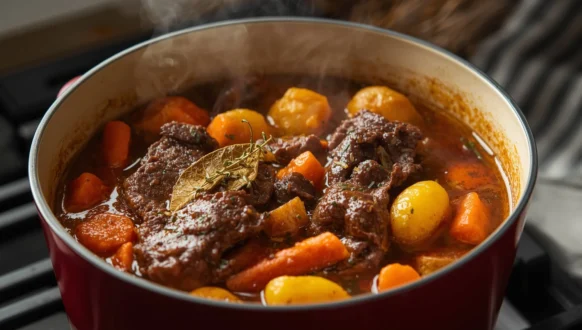
Why This Is the Best Beef Stew Recipe on Stove
When it comes to comfort food, nothing compares to a warm, hearty stovetop beef stew simmering slowly in one pot. What makes this beef stew recipe on the stove stand out is the combination of classic technique, deep caramelized flavor, and the ability to control every step of the cooking process directly over heat. Unlike slow cookers or oven-baked versions, stovetop cooking lets you build richer flavor layers and achieve perfectly tender beef with just the right texture.
What Makes Stovetop Beef Stew Unique
A stovetop beef stew offers a level of control and depth you don’t get from other cooking methods. Because the stew simmers gently on low heat for over an hour, the collagen in the beef breaks down slowly, creating a naturally thick, velvety sauce. Everything cooks in one pot, allowing flavors from the beef, aromatics, herbs, and broth to blend into a balanced, hearty dish.
The stovetop method also ensures:
Better flavor concentration because liquid reduces naturally
Full control over heat levels for perfect simmering
Hands-on cooking, allowing adjustments in seasoning, thickness, or vegetables
Even cooking, especially when using a thick-bottom pot
This method is ideal if you want a stew that is flavorful, customizable, and deeply comforting.
Key Flavor Boosters (Searing, Deglazing, Simmering)
The secret to the best beef stew on the stove is not just the ingredients—but the technique. These foundational cooking steps create layers of flavor:
1. Browning the Beef (Searing)
Searing the meat is essential. When you brown beef cubes in batches, the high heat creates caramelization, forming a golden crust and releasing savory compounds. This process, known as the Maillard reaction, adds depth and richness to the stew.
2. Building Fond
The brown bits stuck to the bottom of the pot after searing are called fond. This is pure flavor. Instead of scraping it away, you build the entire stew on top of it.
3. Deglazing the Pot
Adding beef broth, water, or even a splash of red wine loosens the fond from the bottom. This is called deglazing, and it’s what transforms simple broth into a deeply flavorful stew base.
4. Slow Simmering
After searing and deglazing, the stew simmers slowly. This stage:
Breaks down the beef collagen for tenderness
Helps the vegetables absorb flavor
Allows the broth to thicken naturally
Simmering is one of the most important steps in stovetop stew-making and is key to building a bold, hearty, well-rounded flavor.
Best Pot to Use for Beef Stew on Stove
Choosing the right pot can make all the difference in your stovetop beef stew:
Dutch Oven (Best Choice)
A Dutch oven is ideal because:
It retains heat evenly
Prevents burning on the bottom
Maintains a consistent low simmer
Has high sides for slow cooking
The heavy cast-iron construction ensures the stew cooks uniformly, making it perfect for long stovetop recipes.
Heavy-Bottom Stainless Steel Pot
If you don’t have a Dutch oven, a heavy-bottom stainless-steel pot works well. It distributes heat evenly and prevents hot spots, which can cause sticking or burning.
Why These Pots Matter
Using a thick, sturdy pot ensures:
Better browning
Smoother simmering
Reduced risk of burning
A deeper final flavor
This is why most professional chefs rely on Dutch ovens for stovetop stew-making.
Ingredients You Need for a Classic Stovetop Beef Stew
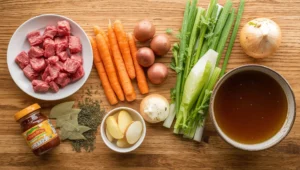
Fresh ingredients you need to make the best beef stew recipe on stove, from beef chuck to aromatic herbs.
The key to mastering the perfect beef stew recipe on stove is choosing the right combination of meat, vegetables, aromatics, and seasonings. Classic stovetop stew relies on simple ingredients—but when used together, they create a rich, hearty, and deeply flavorful dish. Below are the essential components that give this recipe its comforting, old-fashioned taste.
Essential Ingredients for Flavor
These core ingredients build the foundation of any classic stovetop beef stew:
1. Beef Chuck Roast
The best meat for beef stew is beef chuck roast. It contains marbling and connective tissue that breaks down during simmering, making the beef incredibly tender and flavorful.
2. Potatoes
Potatoes add heartiness and help thicken the stew naturally.
Best options: Yukon Gold, Russet, or red potatoes.
3. Carrots
Carrots provide sweetness and color. They hold their shape well during long cooking times.
4. Onions
Yellow or white onions are ideal. When sautéed, they add aromatic depth and help build the stew’s base flavor.
5. Tomato Paste
This is a powerhouse ingredient. Tomato paste adds richness, acidity, and a deeper umami flavor. It also helps thicken the sauce.
6. Beef Broth
For the best flavor, use low-sodium beef broth so you can control the saltiness. Broth provides moisture and blends all the ingredients as they simmer together.
7. Bay Leaves & Thyme
These classic herbs infuse subtle earthy notes that make the stew smell and taste warm, cozy, and home-cooked.
Together, these ingredients create a traditional, well-rounded stew base with rich color and deep flavor.
Best Cuts of Meat for Tender Beef Stew on Stove
Choosing the right cut of beef is crucial. Not all meats turn tender when simmered—some become dry or rubbery. For a stovetop stew, the best cuts of beef include:
1. Chuck Roast (Best Choice)
Chuck roast is the most reliable cut for achieving tender stew meat.
Why it’s ideal:
Contains marbling (fat inside the meat)
Has connective tissue that melts into gelatin
Becomes tender when slow-cooked
Provides rich, beefy flavor
After simmering for 1.5–2 hours, chuck becomes fork-tender and juicy.
2. Pre-Cut Stew Meat (Good Alternative)
Many grocery stores sell “stew meat,” but it’s often a mix of different cuts.
Pros: Convenient and pre-cut
Cons: Quality varies — some pieces may not soften as well
If using stew meat, choose packages with visible marbling and uniform cubes.
3. Avoid Lean Cuts
Lean cuts like sirloin or round steak dry out quickly and don’t have enough fat or connective tissue to remain tender during long simmering.
Tip:
For the best stovetop results, always aim for cuts rich in connective tissue that break down slowly.
Optional Add-Ins for Richer Flavor
These optional ingredients can elevate your stovetop beef stew and make it more robust, aromatic, and flavorful.
1. Worcestershire Sauce
Just a small amount adds depth, savoriness, and umami. It enhances both the beef flavor and the broth.
2. Celery
Celery provides herbal, aromatic undertones and adds more texture to the vegetable mix.
3. Peas
Add peas near the end of cooking to introduce sweetness, color, and freshness.
4. Rosemary
Fresh or dried rosemary pairs beautifully with thyme and bay leaves. A small amount goes a long way.
5. Red Wine (Optional but Recommended)
Adding a splash of red wine during deglazing helps lift the fond from the pot and adds depth, acidity, and warmth to the stew.
It’s optional, but it enhances flavor significantly.
How to Make Beef Stew on the Stove (Step-by-Step)
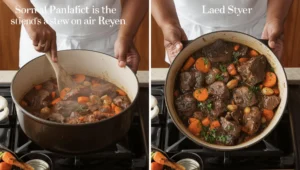
Step-by-step process of cooking beef stew recipe on stove, from searing the beef to simmering the rich stew base.
Making beef stew on the stove is all about building flavor in layers. The stovetop method gives you full control over browning, heat levels, and simmer time — all of which contribute to achieving fork-tender beef and a thick, rich gravy without shortcuts. Below is the complete step-by-step guide.
Step 1 — Sear the Beef Properly
Searing is the foundation of a flavorful stovetop beef stew.
Start by patting the beef cubes dry, then lightly coating them with flour — this not only helps with browning but also contributes to natural thickening later.
Use a hot Dutch oven or heavy pot with a small amount of oil.
Sear in batches to avoid overcrowding. Overcrowding can steam the meat instead of browning it.
Let the beef develop deep caramelized edges (the Maillard reaction), which will give your stew its signature savory flavor.
After all the beef is browned, you’ll notice a layer of browned bits stuck to the bottom (called fond). These bits contain huge flavor.
Searing well is the secret to a rich, hearty beef stew on the stove.
Step 2 — Build the Stew Base
Once the beef is out of the pot, it’s time to develop the aromatic base of your stew.
Sauté onions (and garlic if using) in the remaining oil until softened.
Add tomato paste and cook it for 1–2 minutes to deepen its flavor — the paste will darken and become sweeter.
Deglaze the pot by pouring in a splash of beef broth or red wine.
Use a wooden spoon to scrape up all the browned bits (fond).
This step infuses the stew with a deep, savory flavor.
Then, add back the seared beef along with your liquids (beef broth, water) and aromatics like bay leaves, thyme, and black pepper. This is where the stew starts to come together.
Step 3 — Simmer Until the Beef Is Tender
Bring the pot to a gentle simmer — not a boil — then cover partially and let it cook on low heat for 1.5 to 2 hours.
During this stage:
The collagen in the meat slowly breaks down, turning into gelatin.
This gives the stew its naturally smooth, velvety texture.
The vegetables absorb flavor and soften without falling apart.
The broth naturally thickens as the flour on the beef mixes into the liquid.
Stir every 20–30 minutes to prevent sticking, and keep the heat low to maintain a steady simmer.
If you prefer a thicker stew, you can remove the lid during the last 20 minutes to let extra liquid evaporate.
When the beef is fork-tender and the broth is rich and hearty, your stovetop beef stew is ready.
If you want fall-off-the-bone tenderness, try our slow cooker beef short ribs recipe for rich, flavorful ribs without the oven hassle.
Expert Tips, Variations & FAQs
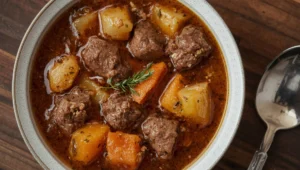
The finished beef stew recipe on stove—thick, hearty, and packed with tender beef and vegetables.
Whether you’re making stovetop beef stew for the first time or trying to perfect your technique, these expert tips and common troubleshooting methods will help you get rich flavor, perfect thickness, and melt-in-your-mouth beef every time.
Tips for Perfectly Tender Beef Stew on Stove
Making tender beef stew on the stove depends on proper heat control and patience. Use these expert tips to get consistently soft, juicy beef:
• Keep the heat low and steady
Stovetop beef stew should never boil. Boiling tightens the meat fibers and causes tough beef. A gentle low simmer breaks down collagen slowly, making the beef soft and tender.
• Simmer covered for most of the cooking time
Covering the pot traps moisture and prevents too much liquid from evaporating too early.
Leave the lid slightly ajar if you want the stew to naturally thicken.
• Avoid over-stirring
Stirring too often can break vegetables apart and turn potatoes mushy.
Stir every 20–30 minutes only to prevent sticking.
• Give the beef time
1.5 to 2 hours is ideal for stovetop cooking.
The longer, slow process is what transforms beef from firm to fork-tender.
How to Fix Common Stew Problems
Even with a great stovetop method, issues can come up — here’s how to troubleshoot them quickly:
• Stew is too thin
Try one of these stovetop thickeners:
Flour slurry (1 tbsp flour + 2 tbsp water)
Cornstarch slurry (½ tbsp cornstarch + 1 tbsp water)
Add the slurry during the final 10 minutes and simmer until thickened.
Or simply remove the lid and let it reduce naturally.
• Stew is too thick
Thin it gradually by adding:
Extra beef broth,
Hot water, or
A splash of red wine (adds flavor too).
Add liquid slowly so you don’t dilute the flavor.
• Beef is still tough
Tough beef means it hasn’t cooked long enough.
Continue simmering on low for 20–30 more minutes, then check again.
The collagen needs time to break down — low heat + long simmer = tender beef.
FAQs About Stovetop Beef Stew
Here are the most common questions home cooks ask when making beef stew on the stove:
• How long does it take to cook beef stew on the stove?
Most stovetop beef stew recipes take 1.5 to 2 hours.
This allows collagen to convert into gelatin, turning the beef tender and giving the broth a richer texture.
• Can I use different vegetables in beef stew?
Yes! In addition to potatoes, onions, and carrots, you can add:
Celery
Peas
Mushrooms
Parsnips
Turnips
Green beans
Just avoid veggies that break down too quickly like zucchini.
• How do I store and reheat stovetop beef stew?
Refrigerate: Up to 4 days in an airtight container
Freeze: Up to 3 months (avoid freezing potatoes if possible)
Reheat: Warm on the stove over medium-low heat.
If the stew thickens in the fridge (very normal), add a splash of broth or water to loosen it.
For techniques on maximizing flavor in beef dishes, see cooking tips for rich beef flavor.
Comment (1)