How To Make The Perfect Chicken Carbonara Recipe In Under 30 Minutes
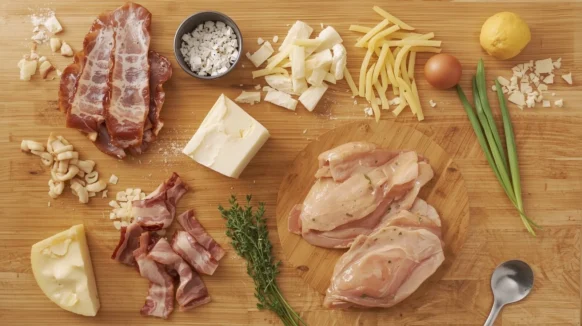
Ingredients for Chicken Carbonara
Creating the perfect chicken carbonara recipe starts with selecting the best ingredients. This creamy pasta dish relies on high-quality components that work together to create a rich, flavorful sauce and perfectly cooked protein. Below, we’ll break down the essential ingredients for your carbonara, including tips on making the best choices for a juicy, tender chicken, a creamy sauce, and savory additions like bacon or pancetta.
Chicken: Choose the Right Protein for a Juicy, Tender Result
One of the first decisions you’ll make when preparing chicken carbonara is choosing the right protein. The chicken in carbonara serves as the base of the dish, and getting it just right is key to achieving a well-balanced flavor.
Chicken Breast vs. Chicken Thighs:
Both chicken breast and chicken thighs can work well for chicken carbonara, but there are some key differences in flavor and texture:Chicken Breast: This is the leaner option, providing a tender yet slightly drier texture. If you prefer a lighter carbonara, chicken breast is a great choice. Be sure to cook it properly to avoid dryness—pan-searing or grilling can help lock in moisture.
Chicken Thighs: For a juicier and more flavorful result, chicken thighs are ideal. Thighs have a higher fat content, which gives them a richer taste and tender texture, making them a popular choice for pasta recipes. They’re also harder to overcook compared to breasts, making them an easy option for a more forgiving dish.
How to Prepare the Chicken:
Whether you choose chicken breasts or thighs, the key is to season the chicken with salt, pepper, and any other spices you prefer (such as garlic powder or paprika). Pan-searing the chicken in olive oil over medium heat until golden brown on the outside and fully cooked inside will provide the best texture. Slice the chicken into strips or cubes to mix easily with the pasta.
Pasta: Traditional and Alternative Options
Pasta serves as the foundation of your creamy pasta dish, providing texture and structure to balance the rich egg-based sauce. While spaghetti is the traditional choice for carbonara, there are many other pasta shapes you can use depending on your preferences or dietary needs.
Traditional Pasta Choices:
Spaghetti: The classic option for carbonara, spaghetti works well because its long strands allow the carbonara sauce to coat each piece evenly, giving you the perfect bite. Its neutral texture balances the richness of the sauce beautifully.
Fettuccine: A slightly wider, thicker pasta, fettuccine holds more sauce and adds a hearty feel to the dish. If you’re after a more indulgent experience, fettuccine makes for a luxurious choice in carbonara.
Alternative Pasta Options:
Gluten-Free Pasta: If you have dietary restrictions or prefer a gluten-free option, there are many alternatives available. Banza chickpea pasta, Tinkyada rice pasta, and Barilla gluten-free spaghetti all provide a great texture and flavor for those avoiding gluten. They hold up well when combined with the creamy carbonara sauce.
Whole Wheat Pasta: For a healthier option with a slightly nutty flavor, whole wheat pasta is a great substitute. It adds more fiber and nutrients while still offering the familiar texture of traditional pasta.
Zoodles (Zucchini Noodles): For a lighter, low-carb alternative, you can replace the pasta with zoodles. Spiralized zucchini can provide a fresh, crunchy texture that pairs well with the creamy carbonara sauce, though the experience will be different from traditional pasta.
When selecting your pasta, make sure to salt the water generously before cooking, as this is the only opportunity to season the pasta itself.
Eggs & Cheese: The Key to a Creamy, Velvety Sauce
The egg-based sauce is what truly makes carbonara stand out, providing the rich, creamy texture that coats the pasta so beautifully. The eggs, along with Parmesan cheese (or Pecorino Romano), create a sauce that feels indulgent but is surprisingly simple to make.
The Role of Eggs:
Carbonara traditionally uses whole eggs or a combination of whole eggs and egg yolks. The eggs act as the base of the sauce, with the heat from the pasta gently cooking the eggs and forming a creamy coating. If you want a richer sauce, you can increase the number of egg yolks used.Tip: Be sure to mix the eggs thoroughly with the cheese before adding to the pasta, so they don’t cook too quickly when you combine them with the hot pasta.
The Cheese:
Parmesan is the most common cheese used in chicken carbonara. It offers a nutty, slightly salty flavor that complements the creaminess of the egg-based sauce. You can use pre-grated cheese, but for the best results, freshly grated Parmesan will melt more smoothly and give you a superior creamy texture.
Pecorino Romano is another traditional cheese used in carbonara, offering a sharper, saltier bite. Combining Parmesan and Pecorino Romano in your sauce creates a wonderful balance of flavors.
Cheese Tips:
Always use freshly grated cheese for the smoothest, creamiest texture. Pre-shredded cheese often contains anti-caking agents that can affect the sauce’s consistency.
For a stronger cheese flavor, you can increase the ratio of Pecorino Romano to Parmesan.
Bacon or Pancetta: Savory Additions and Flavor Alternatives
Bacon or pancetta provides the salty, savory element that pairs perfectly with the creamy sauce. However, depending on your taste preferences or dietary needs, there are a few variations you can try.
Traditional Pancetta or Bacon:
Pancetta is the traditional choice for carbonara. It is Italian cured pork (similar to bacon) but unsmoked, giving it a subtle, delicate flavor. Pancetta’s fatty texture provides a rich contrast to the smoothness of the sauce.
Bacon can be used as a substitute for pancetta if you prefer a smokier flavor. It offers a satisfying crispiness and adds a bit of extra depth to the dish.
Alternatives to Bacon:
Turkey Bacon: For a leaner option, turkey bacon works well. It has a similar crispy texture when cooked and provides a slightly less greasy but still savory flavor.
Prosciutto: If you’re looking for a more authentic, Italian twist, prosciutto (a dry-cured ham) can be used in place of pancetta or bacon. It’s less fatty and offers a more refined, delicate flavor.
Vegan Alternatives: For a plant-based carbonara, consider using smoked tempeh, tofu, or vegan bacon made from coconut or soy. These options can add a similar smokiness and crisp texture without the animal products.
Step-by-Step Instructions for Making Chicken Carbonara
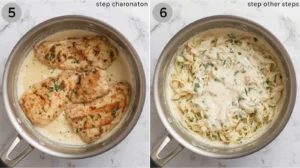
Follow these step-by-step instructions for making the perfect chicken carbonara recipe. First, sear the chicken in creamy sauce, then toss with pasta for a rich, velvety dish.
Making chicken carbonara is easy when you follow these clear, actionable steps. Each part of the process builds on the last to create a perfectly creamy carbonara with tender chicken, flavorful bacon, and a silky, egg-based sauce. Whether you’re new to carbonara or looking to perfect your technique, these instructions will ensure your quick chicken carbonara recipe comes out delicious and satisfying every time.
1. Prepare Ingredients: Getting Ready for Efficient Cooking
The key to a successful creamy carbonara lies in being prepared. Before you start cooking, make sure all of your ingredients are ready to go. This not only saves time but also ensures a smooth cooking process.
Chicken: Begin by cutting the chicken (either chicken breast or chicken thighs) into small strips or bite-sized cubes. Season the chicken with salt and pepper to bring out the natural flavors. Set it aside while you prepare the other ingredients.
Pasta: Bring a large pot of salted water to a boil and cook your pasta (such as spaghetti or fettuccine) according to the package directions. Be sure to reserve about 1 cup of pasta water before draining it. This starchy water will help loosen the sauce later if it becomes too thick.
Bacon/Pancetta: Dice the bacon or pancetta into small pieces, as this will make it easier to crisp up in the pan. Set aside.
Eggs and Cheese: Whisk together 2 large eggs with 1 cup of freshly grated Parmesan cheese. If you’re using Pecorino Romano, you can mix it with the Parmesan for extra flavor. Stir until the mixture is smooth, and set it aside to prevent it from cooking prematurely.
By preparing everything ahead of time, you’ll have a seamless cooking process and avoid scrambling to find ingredients while cooking.
2. Cooking the Chicken: Searing for Maximum Flavor
Cooking the chicken properly is crucial for achieving the best texture and flavor. Whether you’re using chicken breasts or chicken thighs, getting the right sear will add depth to the dish.
Heat the Pan: Start by heating a large skillet or pan over medium-high heat. Add a tablespoon of olive oil to the pan. Let the oil heat up before adding the chicken.
Sear the Chicken: Add the seasoned chicken to the pan and allow it to sear for about 7-10 minutes, turning occasionally until the chicken is golden brown on all sides and cooked through. This step is important for locking in the juices, keeping the chicken tender and flavorful.
Check for Doneness: To ensure the chicken is properly cooked, cut into one of the pieces—if the meat is no longer pink in the center, it’s done. Remove the chicken from the pan and set it aside.
Optional Tip: If you’re using chicken thighs, they’ll have a bit more fat. You can leave a little of the rendered fat in the pan for added flavor when you cook the bacon or pancetta.
Cooking the chicken carefully adds rich flavor to the creamy carbonara sauce and ensures the dish isn’t dry.
3. Making the Carbonara Sauce: A Creamy, Silky Sauce Without Scrambling the Eggs
The sauce is what makes carbonara so distinctively creamy and rich, and it’s created without any cream. Instead, the combination of eggs, cheese, and pasta water forms the foundation of this velvety sauce.
Whisk the Eggs and Cheese: In a separate bowl, whisk together the eggs and grated Parmesan (and Pecorino Romano, if using). The cheese will melt into the eggs, creating a smooth, creamy texture.
Add Cream for Extra Richness (Optional): While traditional carbonara doesn’t require cream, you can add a splash of heavy cream or half-and-half if you prefer a richer texture. Mix it into the egg and cheese mixture until smooth.
Keep the Heat Low: Once the pasta is cooked and drained, keep the pan with the chicken (or a separate pan) on low heat when adding the egg mixture. The key to making carbonara sauce is to prevent the eggs from scrambling. The residual heat from the pasta and pan will cook the eggs slowly, creating a creamy sauce.
Add Pasta Water: To thin the sauce and make it smoother, gradually add the reserved pasta water, stirring continuously. Start with a tablespoon at a time, ensuring the sauce remains silky and creamy.
The egg-based sauce is the heart of carbonara, and this technique ensures it stays smooth without becoming too thick or lumpy.
4. Combining Everything: Tossing Pasta, Chicken, and Sauce for a Perfectly Creamy Carbonara
Now that you’ve prepared your ingredients and made the creamy sauce, it’s time to bring everything together. Tossing the pasta, chicken, and sauce will ensure the creamy carbonara coats each strand of pasta perfectly.
Combine the Pasta and Sauce: Add the drained pasta to the pan with the cooked chicken. If your pan is large enough, you can combine everything in it, otherwise, use a large bowl for tossing.
Toss with the Egg Mixture: Slowly pour the egg and cheese mixture over the hot pasta, stirring constantly to coat the pasta evenly. The residual heat from the pasta and chicken will cook the eggs, creating a smooth, silky sauce.
Adjust the Consistency: If the sauce is too thick, continue adding small amounts of pasta water until you achieve the perfect creamy texture.
Add Bacon/Pancetta: Stir in the crispy bacon or pancetta (or your preferred alternative) to the pasta. This adds crunch and savory flavor that balances the creamy sauce.
Final Seasoning: Taste the pasta and adjust the seasoning with extra salt, pepper, or Parmesan cheese as needed. Freshly cracked black pepper is a signature element in carbonara, so don’t skimp on it.
Once everything is combined, you’re ready to serve up a bowl of creamy carbonara that’s bursting with rich, savory flavors.
Tips for Making the Best Chicken Carbonara
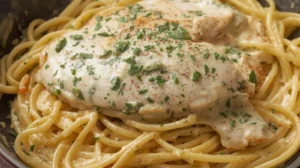
Perfectly cooked chicken served with creamy carbonara sauce over spaghetti. This chicken carbonara recipe is a comforting and flavorful meal.
Creating the best chicken carbonara requires a few key techniques and ingredients. These tips will help you achieve that perfect, creamy texture, cook the chicken to perfection, and explore carbonara variations to suit your personal taste. Whether you’re looking for the best pasta for carbonara or want to experiment with alternative ingredients, these tips will guide you in making a delicious and satisfying meal every time.
1. Achieving the Perfect Creamy Texture
The creamy carbonara sauce is the heart of this dish, and getting it just right is essential. Here are a few tips to ensure your carbonara has that smooth, velvety texture everyone loves.
Egg Preparation:
One of the biggest challenges in making carbonara is ensuring that the eggs don’t scramble. The key is to use room temperature eggs and whisk them together with freshly grated cheese (such as Parmesan or Pecorino Romano) until the mixture is smooth. This will help the cheese melt smoothly when combined with the hot pasta and prevent clumping.Tip: Always add the egg mixture off the heat to avoid scrambling. The residual heat from the pasta and chicken is enough to cook the eggs gently.
Pasta Water:
To achieve the right consistency in your sauce, you’ll need to add some pasta water. Before draining the pasta, be sure to reserve at least 1 cup of pasta water. The starch in the water helps thicken the sauce and makes it cling better to the pasta.Tip: Gradually add the pasta water while tossing the pasta and egg mixture together. If the sauce is too thick, continue to add pasta water until you reach the perfect creamy consistency.
Use Freshly Grated Cheese:
Freshly grated Parmesan or Pecorino Romano is crucial for the best texture. Pre-grated cheese often contains anti-caking agents that can make the sauce lumpy or gritty. Freshly grated cheese melts more smoothly, giving the sauce a silky finish.
By paying attention to these key steps, you’ll master the art of making carbonara creamy every time, without the risk of the sauce becoming too thick or clumpy.
2. Cooking the Chicken to Perfection
For chicken carbonara, the protein needs to be cooked just right to ensure it’s flavorful and tender. Here’s how to sear your chicken properly for the best result:
Choose the Right Cut of Chicken:
Both chicken breast and chicken thighs work well for carbonara. However, chicken thighs tend to have more fat and are generally more forgiving when it comes to overcooking, making them an excellent option for carbonara variations.Tip: Chicken breast can dry out if overcooked, so be sure to monitor the cooking time closely. Chicken thighs are juicier and more forgiving, adding more flavor to the dish.
Proper Searing:
Heat a large skillet over medium-high heat and add a bit of olive oil. Once the oil is hot, add your seasoned chicken (with salt and pepper) to the pan. Sear the chicken for about 7-10 minutes, turning it to ensure it’s evenly browned on all sides. This will lock in the juices and give it a nice, crispy texture.Tip: Let the chicken rest for a few minutes after cooking to allow the juices to redistribute, keeping the meat moist and flavorful.
Cutting the Chicken:
Once cooked, slice the chicken into bite-sized strips or cubes. This makes it easier to incorporate into the pasta and ensures even distribution of chicken in every bite.
Achieving the perfect sear and using tender, juicy chicken is key to a flavorful chicken carbonara. The slight crispiness from searing also adds a nice texture contrast to the creamy sauce.
3. Alternative Ingredients: Customizing Your Carbonara
If you’re looking to customize your carbonara, there are many ways to swap out traditional ingredients for alternatives. Here are some carbonara variations that cater to dietary preferences or flavor choices.
Bacon Alternatives:
Bacon or pancetta is traditionally used in carbonara, but there are plenty of alternatives depending on your dietary preferences:Turkey Bacon: If you’re looking for a leaner option, turkey bacon works well. It offers a similar texture and savory flavor but with less fat.
Prosciutto: For a more delicate, Italian touch, prosciutto is an excellent choice. It adds a rich, salty flavor and complements the creamy sauce perfectly.
Vegan Options: For a plant-based version, consider using smoked tempeh, vegan bacon, or mushrooms as substitutes. These alternatives mimic the smoky, crispy texture of bacon and add depth to the dish.
Pasta Variations:
While spaghetti is the traditional choice for carbonara, you can switch things up with different types of pasta:Fettuccine: A thicker pasta like fettuccine can hold up better to the creamy sauce, offering a more substantial bite.
Gluten-Free Pasta: If you have dietary restrictions, gluten-free pasta (such as chickpea pasta or rice pasta) is an excellent option. Be sure to cook it properly to avoid mushiness, as some gluten-free pastas can break down more easily.
Whole Wheat Pasta: For a healthier twist, whole wheat pasta adds a nutty flavor and more fiber to your carbonara.
Non-Dairy Options:
For a dairy-free carbonara, you can substitute the cream with coconut cream or cashew cream. Instead of cheese, you can use nutritional yeast to add a cheesy, umami flavor that’s both rich and satisfying.
These alternatives allow you to customize your carbonara to fit different preferences, whether you’re seeking a leaner option or a vegan version.
4. Seasoning and Garnishing: Adding the Finishing Touches
Proper seasoning and garnishing are key to making your chicken carbonara truly stand out. Here’s how to make your dish even more flavorful and visually appealing:
Salt and Pepper:
Carbonara is a simple dish, but seasoning is crucial. Be sure to salt the pasta water generously to season the pasta itself. Then, taste the final dish and adjust the seasoning with more salt or pepper as needed. Freshly cracked black pepper is essential for carbonara and adds a nice bite that balances the richness of the sauce.Tip: For an extra pop of flavor, freshly ground black pepper is the best choice. It adds more intensity than pre-ground pepper.
Cheese:
While the Parmesan and Pecorino Romano in the sauce will provide a rich, cheesy flavor, you can always add more cheese on top when serving. A sprinkle of extra grated Parmesan on each plate adds flavor and enhances the creamy texture.Fresh Herbs:
Though carbonara traditionally doesn’t include herbs, you can sprinkle some fresh parsley or basil on top for a pop of color and a burst of freshness. This works particularly well with the richness of the dish, adding a vibrant contrast.Final Touch:
For a finishing touch, drizzle a bit of extra virgin olive oil over the pasta before serving. This adds a glossy, luxurious finish to the dish and enhances the flavor with a hint of fruity richness.
The right balance of seasoning and garnishing makes your chicken carbonara not only delicious but visually appealing as well.
How to Serve Your Chicken Carbonara

Deliciously served chicken carbonara with creamy sauce, pasta, and tender chicken, topped with fresh herbs for the perfect finishing touch.
While chicken carbonara is already a rich and indulgent dish on its own, serving it with the right sides and garnishes, paired with the perfect wine, can elevate the entire meal. Here are some serving tips, side dishes, and wine pairings to make your carbonara dinner feel truly special, along with garnishing tips that will make your dish restaurant-worthy.
1. Plating and Presentation Tips: Serving Carbonara in Style
The way you plate and present chicken carbonara plays a big role in the overall dining experience. Here are some tips for plating your dish beautifully:
Use Shallow, Wide Bowls or Plates:
Carbonara looks best when served in wide, shallow bowls or plates. This allows the creamy sauce to spread out evenly, showing off the texture of the pasta and the delicious mix of chicken and bacon. It also gives you plenty of room to swirl the pasta in a visually appealing way.Add Height:
For a more elegant presentation, gently twirl the pasta with tongs or a fork to create a mound in the center of the plate. This adds visual interest and makes the dish look more sophisticated, as if it came straight from a restaurant. For more plating techniques, check out this article on How to Plate Pasta Like a Pro from Fine Cooking.Showcase the Saucy Goodness:
Let the creamy carbonara sauce glisten by leaving some of it visible on top of the pasta mound. The sheen from the sauce is a key part of carbonara’s appeal, so make sure it’s showcased.
By following these simple plating techniques, your chicken carbonara will not only taste incredible but also look stunning on the plate.
2. Complementary Side Dishes: What to Serve with Chicken Carbonara
While carbonara is a filling dish, pairing it with the right sides can enhance its flavor and balance out the richness. Here are some great side dishes for carbonara that complement the creamy, savory nature of the dish:
Fresh Salads:
A fresh salad with a light vinaigrette is a perfect balance for the richness of carbonara. The acidity from the vinaigrette will help cut through the creaminess of the sauce. Consider a simple mixed greens salad with arugula, baby spinach, or watercress, dressed with a tangy lemon vinaigrette (olive oil, lemon juice, mustard, salt, and pepper). For more salad ideas, check out this guide to making the perfect salad from EatingWell.Roasted Vegetables:
Roasting vegetables caramelizes their natural sugars, adding a savory and slightly sweet element to balance the richness of the carbonara. Try roasted broccoli, asparagus, or Brussels sprouts with a bit of lemon and olive oil. These vegetables provide crunch, freshness, and a deep flavor that pairs perfectly with the creamy pasta. Learn more about the benefits of roasting vegetables at The Kitchn.Garlic Bread:
A classic side to serve with carbonara is garlic bread. The crispy, buttery texture of toasted bread with garlic complements the creamy pasta while providing a satisfying contrast. To make it even more indulgent, you can sprinkle a bit of Parmesan cheese on top before toasting. For a great garlic bread recipe, check out this one from Bon Appétit.Breadsticks:
Breadsticks are another great side to serve with chicken carbonara. Their light, crunchy texture makes them an ideal option for dipping into the sauce or for mopping up any leftover creaminess from the plate.Steamed Vegetables:
If you prefer something lighter than roasted vegetables, opt for steamed vegetables like green beans, peas, or zucchini. These add color and a mild flavor that won’t compete with the rich carbonara.
These side dishes for carbonara balance the richness of the pasta and add freshness, crunch, and contrast to the meal. For more side dish inspiration, check out this comprehensive list of easy side dishes from BBC Good Food.
3. Wine Pairings for Chicken Carbonara
Pairing the right wine with your chicken carbonara can enhance the flavors and elevate the overall dining experience. Since carbonara has a rich, creamy sauce, the wine should complement the creaminess without overwhelming the dish. Here are a few options for the best carbonara wine pairing:
White Wines:
Chardonnay is one of the best choices for carbonara due to its rich, buttery texture, which mirrors the creamy sauce of the dish. Look for a Chardonnay that has been lightly oaked to complement the dish without overshadowing it. Learn more about Chardonnay wine pairings from Wine Enthusiast.Red Wines:
While red wines aren’t typically paired with carbonara, a light red wine like Pinot Noir can work well. Its smooth texture and fruity flavor won’t overpower the delicate flavors of the carbonara and will provide a nice contrast to the creamy sauce. Find out more about pairing Pinot Noir with pasta at Decanter.Sparkling Wines:
For a more festive occasion, Prosecco or Champagne can be a great pairing. The bubbles help cleanse your palate, and the slight sweetness of Prosecco pairs beautifully with the savory elements of the carbonara. Explore Champagne pairing ideas with food at Wine Spectator.
Choosing the right wine will complement the creamy, savory flavors of the chicken carbonara and create a balanced, refined dining experience.
4. Garnishing Tips: Adding the Finishing Touches
Garnishing your chicken carbonara with a few simple touches can elevate its appearance and flavor. Here are some tips to make your dish even more appealing:
Freshly Cracked Black Pepper:
Black pepper is essential in carbonara, and freshly cracked black pepper adds a more intense flavor than pre-ground pepper. A generous sprinkle on top right before serving provides a bit of heat and a nice visual contrast to the creamy sauce.Fresh Herbs:
Adding fresh herbs like parsley or basil on top of the carbonara adds a burst of color and freshness. The herbal notes help balance the richness of the creamy sauce. If you like a more robust flavor, thyme or oregano could work well too, though they should be used sparingly to avoid overpowering the dish.Grated Parmesan or Pecorino Romano:
A light sprinkle of grated Parmesan or Pecorino Romano over the top adds an extra layer of flavor. For a more indulgent finish, you can top the carbonara with a bit of extra cheese before serving.Drizzle of Olive Oil:
A drizzle of extra virgin olive oil adds a glossy finish to the dish and an additional richness. It’s a simple yet effective way to enhance both the flavor and appearance of the carbonara.
These simple garnishing tips help elevate your chicken carbonara, making it look and taste like something you’d get at a fine restaurant.
Conclusion
Bringing everything together, making the perfect chicken carbonara recipe is all about mastering a few essential techniques and using high-quality ingredients to achieve that signature creamy texture and comforting flavor. With the right balance of eggs, cheese, pasta, and perfectly cooked chicken, this Italian-inspired dish becomes the ultimate creamy carbonara — rich, flavorful, and deeply satisfying.
Recap: The Key Steps to Making the Perfect Chicken Carbonara
Let’s quickly recap the simple yet crucial steps to making your chicken carbonara flawless every single time:
Choose Fresh, Quality Ingredients
Start with fresh ingredients — tender chicken breast or thighs, crispy bacon or pancetta, high-quality Parmesan or Pecorino Romano cheese, and fresh eggs. These are the building blocks of a delicious chicken carbonara pasta. The quality of these components directly influences the taste and creaminess of your final dish.Cook the Pasta and Chicken Properly
The pasta should be cooked al dente — tender but still firm to the bite. This allows it to hold up well when coated in the rich carbonara sauce. Meanwhile, pan-searing the chicken until golden brown locks in moisture and flavor, ensuring juicy, tender bites in every forkful.Master the Creamy Carbonara Sauce
The heart of the dish lies in the sauce. Combine eggs and grated cheese to create a luscious, silky egg-based sauce that coats each strand of pasta beautifully. The trick to making carbonara creamy — not scrambled — is to add the sauce off the heat and toss it with the hot pasta, letting the residual warmth thicken it gently. For an extra touch of richness, add a splash of reserved pasta water as you toss to achieve that perfect glossy texture.Toss Everything Together
Once the pasta, chicken, and bacon or pancetta are combined, toss them thoroughly to ensure the carbonara sauce coats every bite. The creamy sauce, savory chicken, and crispy bacon come together harmoniously to create a perfectly balanced pasta with chicken dish.Add the Finishing Touches
Season your chicken carbonara generously with freshly cracked black pepper and a sprinkle of Parmesan cheese. For presentation and a pop of color, garnish with chopped parsley or a drizzle of extra virgin olive oil. These small details not only elevate the look of your dish but also add depth and aroma to every bite.
Serving the Perfect Chicken Carbonara Meal
To serve your chicken carbonara like a true chef, think about how the meal fits together as a whole:
Side Dishes for Carbonara: Balance the richness with lighter sides like a fresh green salad, roasted asparagus, or garlic bread to add crunch and freshness.
Wine Pairing: Pair your carbonara with a crisp Pinot Grigio, buttery Chardonnay, or a light Pinot Noir for the perfect carbonara wine pairing that complements the creamy texture without overpowering it.
Presentation: Serve your carbonara in a shallow bowl, twirling the pasta neatly, and top with freshly grated cheese and cracked pepper for that restaurant-worthy look.
These elements turn your homemade creamy chicken carbonara into an elegant and complete meal experience — one that’s both comforting and impressive.
Final Thoughts
The beauty of chicken carbonara lies in its simplicity — minimal ingredients, maximum flavor. With a few expert tips on how to make carbonara creamy, properly searing your chicken, and using freshly grated cheese, you can easily recreate this Italian favorite in your own kitchen.
Whether you’re making it for a quick weeknight dinner or a special occasion, chicken carbonara is the kind of dish that never fails to impress. It’s rich yet balanced, indulgent yet approachable, and endlessly customizable with carbonara variations like turkey bacon, gluten-free pasta, or even vegan substitutes.
So, next time you crave a bowl of creamy pasta, remember that a little patience, precision, and passion are all you need to master the perfect chicken carbonara recipe. Serve it fresh, pair it thoughtfully, and enjoy the comforting harmony of flavors that make this dish a timeless classic.
posted by 益群网 on November 13, 2025
益群网:终身分红,逆向推荐,不拉下线,也有钱赚!尖端资源,价值百万,一网打尽,瞬间拥有!多重收益,五五倍增,八级提成,后劲无穷!网址:1199.pw